
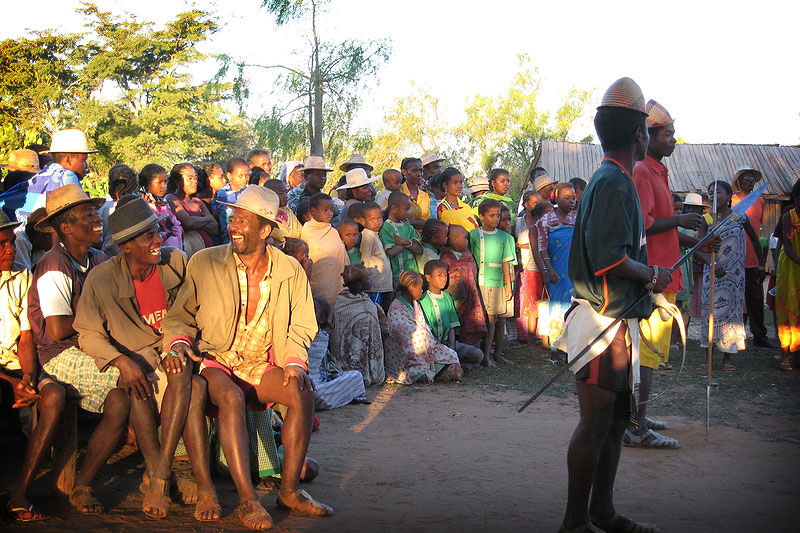
Watching Andrew Zimmern‘s Bizzare Foods episode on Madagascar, I was amazed by some of the shocking foods he ate. On this island nation roughly the size of Texas, you can find everything on the dinner platter from bugs to – get ready for it – circumcision ceremony remnants.
Ahem.
I’m not going to clarify that one. (Remember, I’m here to bring us together over simple foods, not shocking foods, so we won’t be going down any of those roads. I will say, however, if you get a chance and are curious, Zimmern never disappoints when it comes to the Bizarre).
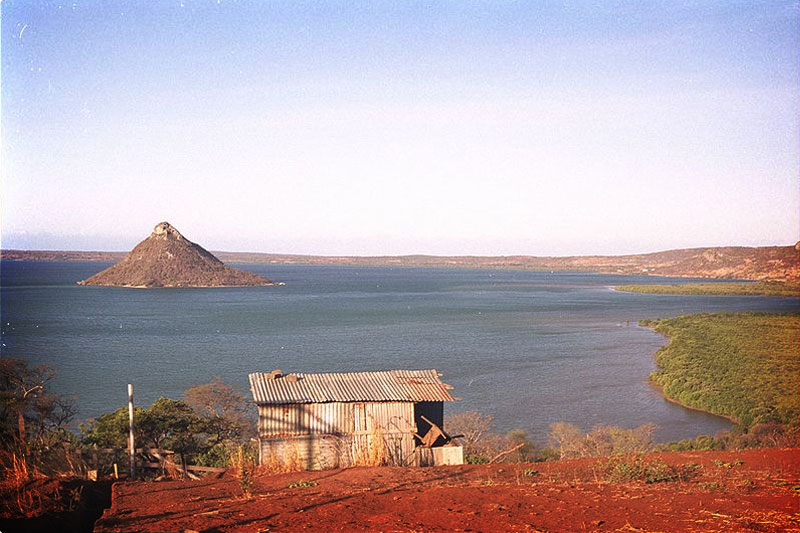
Even though Madagascar is about as remote as it gets – 200 miles away from Africa and populated with plants and animals that have continued to evolve on their own for thousands of years – there are some things you’ll recognize. For starters there’s rice – a staple from which nothing goes to waste. Even the scrapings off the bottom of the rice pot are burned until toasty, then mixed with water to make “Burnt Rice Tea” – a practical and efficient way to add flavor to regular water [Recipe].
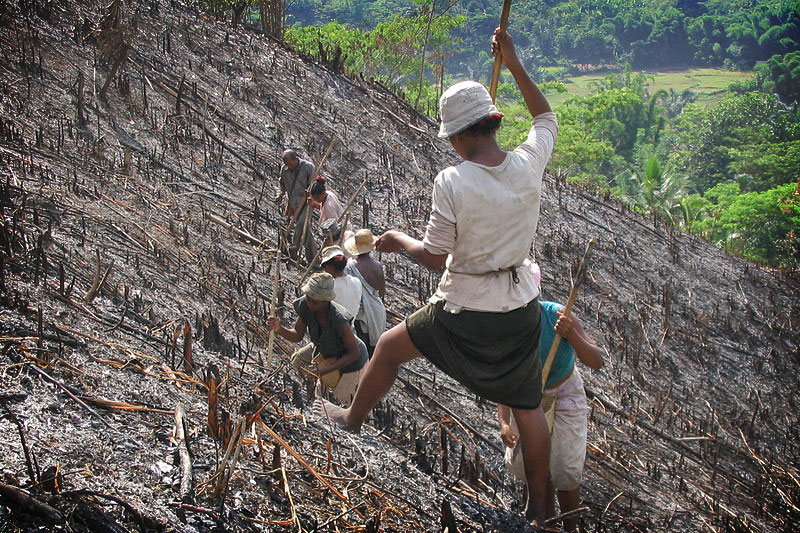
Madgascar is known for it’s unusual Zebu meat, however meat is very rarely eaten; chicken and fish are more common, especially fish. Meat can simply be boiled, or it can be seasoned with whatever vegetables are around, such as cassava leaves, peppers, onion, and, near the sea, coconut oil or milk [Recipe]. In this way, the people of Madagascar bring out flavors somewhat similar to the Polynesian peoples.
Vanilla beans grow rampant on the island, as any baker would have guessed by now, considering the world’s most beloved vanilla bean is stamped all over with “100% pure Madagascar Vanilla Bean” … these beans can be used to season anything from savory tomato sauces to fruit salads [Recipe].
Speaking of fruit, you’ll find a blend of items similar both to Africa and Asia: mangoes, bananas, citrus, lychees, rambutan (the spikey haired cousin to the rambutan), beobap, and pineapples are all delicious offerings.

Maps and flag courtesy of CIA World Factbook. Photo of Antananarivo - Mahamasima Stadium and Anosy lake, Madagascar by ernard Gagnon
So those are a few tidbits about food from Madagascar… I’m looking forward to sharing the rest of the week with you.
PS. I made some goodies for you. Consider it my way of saying thank you for being so wonderful.



Madagascar was settled by Indonesians 2000 years ago and ruled by their descendants for 1900 years after that. Meanwhile, immigrants from the African mainland, India, China and the colonial ruler France poured in. Their cuisine reflects all of these influences. It’s usually rice (brought 2000 years ago from Indonesia) with a sauce made of coconut milk, tomatoes, curry and spices.
If you read about the 19th century, it’s really fascinating. All those Indonesian-descended kings and queens with really weird names ruling an independent kingdom. (Sometimes very bloody…) Their music is amazing too. I wrote this last year about their music. (Sorry, some of the links no longer work.)
Did you ever wonder what the music of Madagascar sounded like? I never did. I just assumed there wasn’t much. And yet… how could an island settled by Indonesian immigrants 2000 years ago, also populated by people from the nearby African mainland, invaded by Arabs soon after the death of Mohammed, lair of 17th century pirates (one of whom brought Madagascar rice home to his native South Carolina), forged into one kingdom by a 19th century warrior-king from the highlands with the unforgettable name of Andrianampoinimerina (which name he took himself, having been born with the name of Ramboasalamarazaka) … how could such a simmering stew fail to produce a cornucopia of incredible sound?
Let’s start our tour with the Afindrafindrao, a traditional dance (based on late 18th century French quadrilles) and played on Madagascar’s most famous instrument, the zither-like stringed valiha, played by one of the best valiha players, Sylvestre Randafison
http://music.myspace.com/Modules/MusicV2/Pages/PopUpPlayer.aspx?songid=46476963&artid=21003112
Now here’s a more modern use of the valiha, by another top player, Justin Vali
http://music.myspace.com/Modules/MusicV2/Pages/PopUpPlayer.aspx?songid=29440840&artid=14269306
And here’s a guitar solo by D’Gary, discovered in a tiny jungle village where he taught himself guitar… and people who know say he ranks among the world’s best guitarists. That’s just one man playing one guitar, though it sounds like several people playing at once
http://music.myspace.com/Modules/MusicV2/Pages/PopUpPlayer.aspx?songid=46480438&artid=21769887
and here he is with a singer (D’Gary just walked into a studio and recorded these two plus 11 other songs in an hour)
http://music.myspace.com/Modules/MusicV2/Pages/PopUpPlayer.aspx?songid=46480440&artid=21769887
Here’s Rakoto Frah, the most famous sodina (a kind of flute) player.. he could play 2 at once
http://music.myspace.com/Modules/MusicV2/Pages/PopUpPlayer.aspx?songid=41722632&artid=19732375
Stepping back in time, here is a recording by a popular singer in the 1930s
http://music.myspace.com/Modules/MusicV2/Pages/PopUpPlayer.aspx?songid=46476537&artid=21769275
And even farther back, here is music used in traditional trance ceremonies to tame malicious spirits
http://music.myspace.com/Modules/MusicV2/Pages/PopUpPlayer.aspx?songid=45086289&artid=18422078
To end our tour, some modern greats:
Tarika Sammy
http://music.myspace.com/Modules/MusicV2/Pages/PopUpPlayer.aspx?songid=46662638&artid=21005828
and Dama Mahaleo
http://music.myspace.com/Modules/MusicV2/Pages/PopUpPlayer.aspx?songid=46662633&artid=21005828
and finally Toto Mwandjani, a singer who plays in international African rock style
http://music.myspace.com/Modules/MusicV2/Pages/PopUpPlayer.aspx?songid=47400760&artid=13011175
And I still haven’t explored the modern coastal dance styles, like Salegy or Tsapika. But that’s enough for now.
Wow Brian! You always add such interesting flavor to our Adventure. I love those names…. Andrianampoinimerina and Ramboasalamarazaka !!
My father in law has spent a lot of time in Madagascar. A little tidbit: I remember he brought back some incredible fois gras thanks to the French domination. It was as good as its French cousin and of course much cheaper.
Oh, how interesting! (and yummy).
So glad you shared the oddities from Zimmern, but in the words of Willy Wonka, “that is called cannibalism, my dear children, and is in fact frowned upon in most civilizations.”
Willy Wonka said that? Wow. He gets into some heavy subjects ha ha.